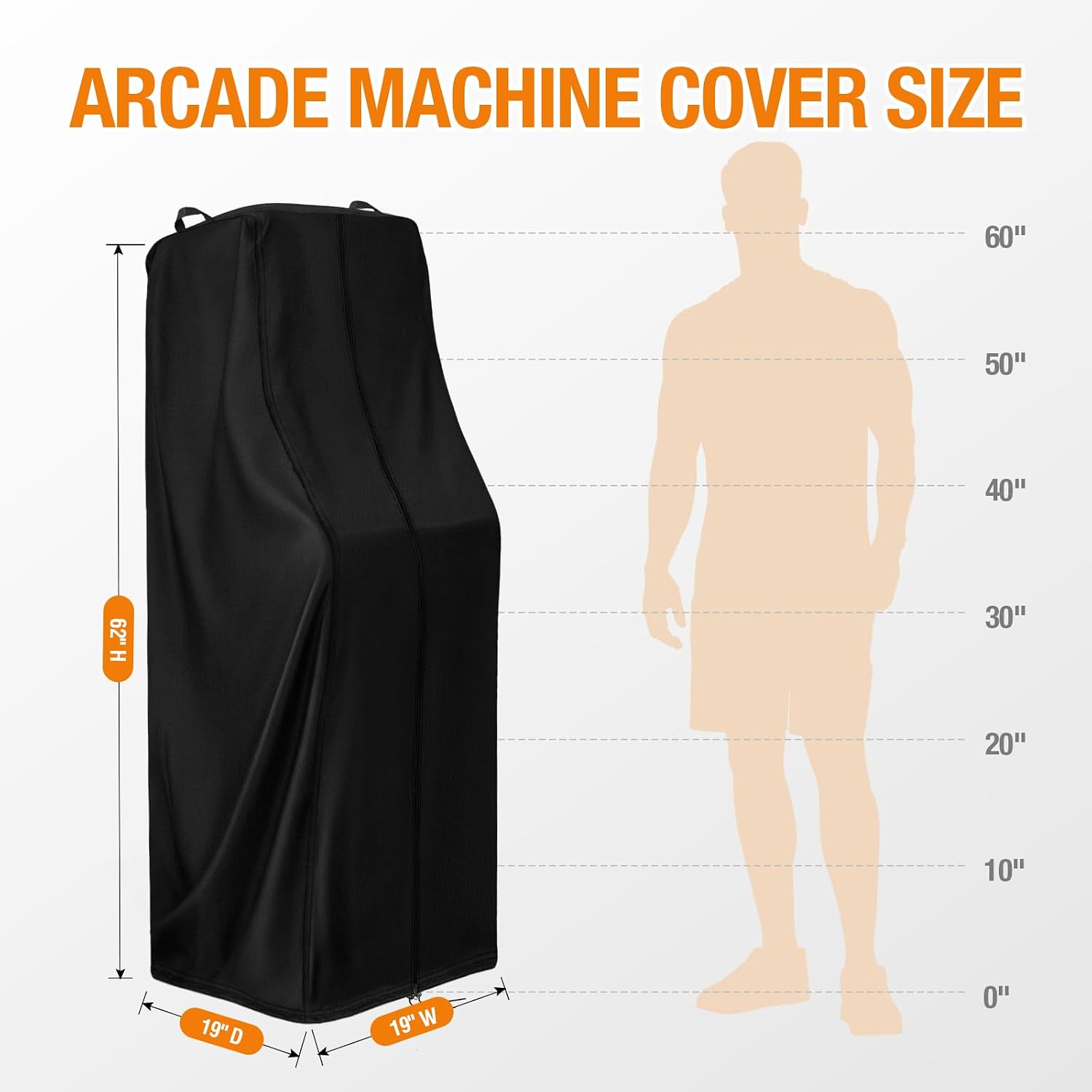
If you’ve spent real money on an arcade cabinet — whether that’s a flat-pack Arcade1Up-compatible pedestal or a custom walnut-finish stand from a specialty fabricator — the finish is one of the first things that can quietly degrade. A “finish” is the outer surface layer of a cabinet or stand: laminate, vinyl wrap, powder coat, or stained hardwood. Moisture, dust, UV exposure, and even stray spills from a nearby drink station will dull it, stain it, or peel it over time. An arcade cabinet cover is exactly what it sounds like: a fabric or coated-material sleeve that fits over your cabinet when it’s not in use or in storage, acting as a barrier between the environment and that surface you paid to look good. This guide compares what separates a cover that genuinely protects from one that just makes your machine look tucked in — and gives you a clear decision framework based on your setup and budget.
Why the Cover Category Is More Complicated Than It Looks
The short version: most covers on the market were not designed with arcade cabinets in mind. They’re furniture covers — patio furniture covers, to be precise — that happen to fit cabinet-shaped objects. That cross-category origin matters a lot when you’re evaluating protection claims, because patio furniture tolerances and arcade cabinet tolerances are different problems.
A patio furniture cover is rated for outdoor intermittent weather exposure: rain, UV, humidity. An arcade cabinet — even one in a garage, basement, or commercial venue back room — faces a different threat matrix: sustained humidity from HVAC cycles, fine particulate dust that works into laminate seams, accidental liquid contact, and the mechanical stress of being put on and pulled off repeatedly. A cover engineered for the former may technically check the “waterproof” box but fail on the things that actually destroy arcade finishes over a three-to-five-year horizon.
Community documentation published by Coin-Op.org, specifically the resource titled “Cabinet Moisture Damage Reports and Storage Recommendations,” repeatedly flags two culprits above all others: condensation trapped under non-breathable covers — which accelerates laminate bubbling and MDF swelling — and abrasion from covers with rough interior liners that micro-scratch powder-coated steel or high-gloss vinyl wraps every time you remove them. Both failure modes are invisible until they aren’t, and by then you’re looking at a refinish job.
Game Room Solutions, in its Cabinet Care FAQ and Product Documentation, echoes this concern, specifically calling out that sealed polyethylene covers without an interior fleece lining are a risk for cabinets stored in temperature-variable environments like garages. The condensation cycle — warm air meeting a cold cabinet surface trapped under an impermeable shell — does real damage to MDF-core pedestals over repeated seasonal transitions.
The Three Specs That Actually Matter (And How to Read Them)
When you’re comparing covers, you’ll encounter a few recurring spec claims. Here’s how to interpret each one honestly.
Waterproofing Tiers: Budget, Mid-Tier, and Premium Coatings Compared
The terms “waterproof,” “water-resistant,” and “water-repellent” are not interchangeable — though import-tier suppliers use them that way anyway. Popular Mechanics, in its article “How Waterproof Ratings Actually Work: IP Codes and Fabric Coatings Explained,” draws the clearest distinction: “water-resistant” means the fabric slows water penetration under low pressure such as a light mist or brief splash; “waterproof” means it holds against sustained water pressure, typically tested to a hydrostatic head rating measured in millimeters; “water-repellent” describes a surface treatment — usually a DWR or durable water repellent coating — that causes water to bead but degrades with washing and UV exposure over time.
Budget-Tier Covers: 210D Oxford Polyester
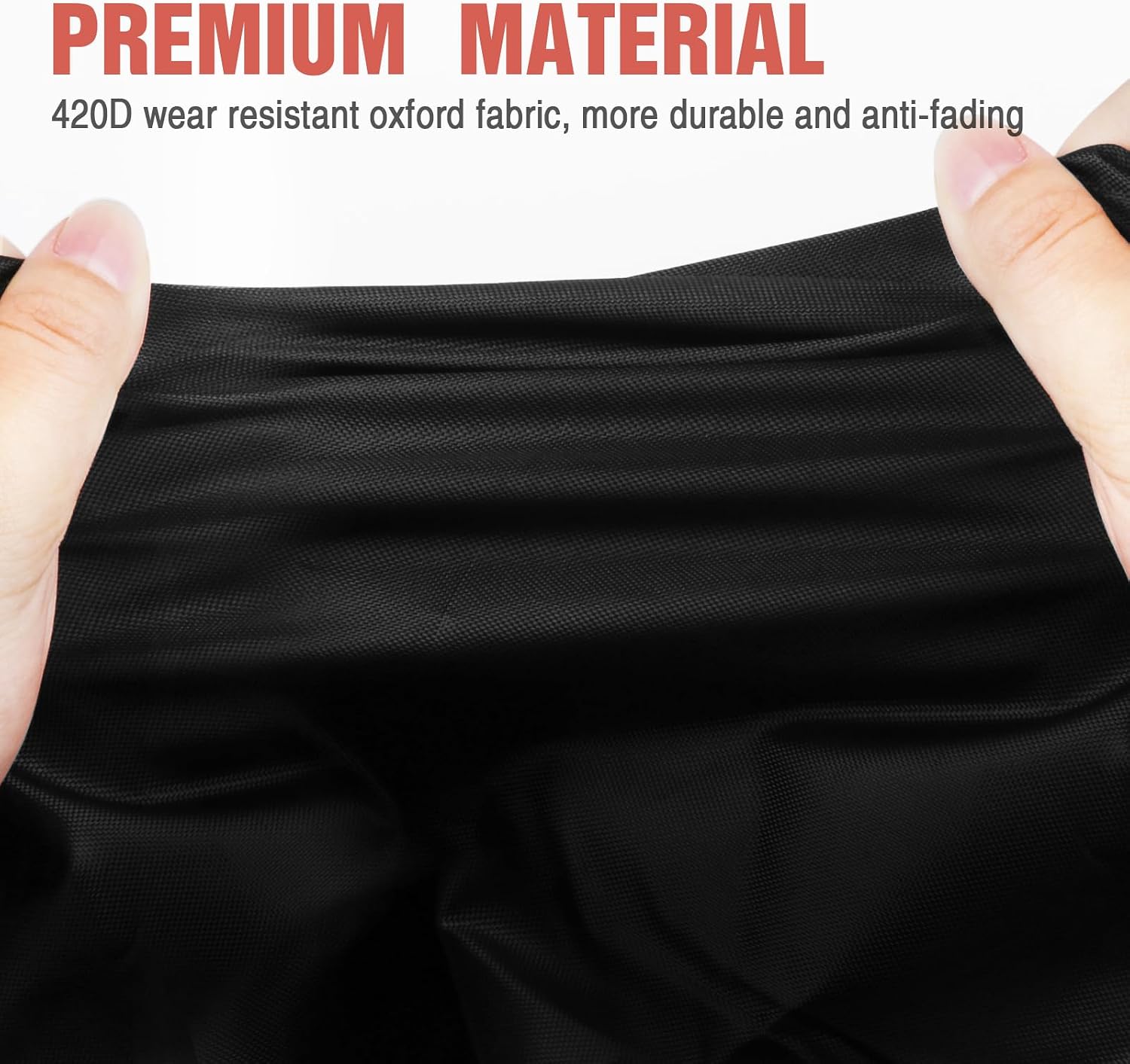
Budget-tier covers typically use 210D Oxford polyester with no documented hydrostatic head rating and no interior liner. They rely entirely on a DWR surface treatment for any water resistance. For a climate-controlled game room where dust is the only real threat, this tier is technically adequate — but the DWR coating degrades within 12 to 18 months of regular use, and there is no backup protection layer once it does. Corner seams on this fabric weight are also the first structural failure point; aggregated owner experience across long-run product reviews shows stress tears developing at seams within 6 to 12 months of regular on/off cycling.
Game
$18.69
In stock on Amazon
Check price on AmazonMid-Tier Covers: 600D Oxford Polyester with Interior Liner
Mid-tier covers use 600D Oxford polyester with hydrostatic head ratings of 1,000–1,500mm and a soft-knit or brushed interior liner. This is the practical sweet spot for garage and basement storage where humidity varies seasonally. The interior liner is the differentiating feature: it protects gloss vinyl and powder coat from micro-abrasion during on/off cycles in a way that budget covers simply cannot. Denier — the “D” figure — is a measure of thread density; higher denier means a heavier, more tear-resistant weave, and the jump from 210D to 600D is meaningful for covers that are cycled on and off multiple times per week.
BigHead 4PCS
$18.99
In stock on Amazon
Check price on AmazonPremium Covers: 900D Oxford or Coated Canvas with Bonded Fleece Interior
Premium covers use 900D Oxford or coated canvas with hydrostatic head ratings of 1,500–2,000mm or higher, bonded fleece interiors, and ventilated side panels. This tier is appropriate for commercial venue use or any setup where the cover is cycled on and off daily by staff, the cabinet carries an investment-grade finish, or the storage environment involves significant temperature swings. At this tier, fit-to-profile construction — accounting for protruding control panels, T-molding ridges, and recessed bases — is as important as the fabric specification itself. Arcade Heroes, in its resource “Protecting Your Arcade Investment: Storage and Cover Basics,” specifically identifies profile-matched construction as the feature most correlated with long-term finish preservation in operator surveys.
Arcade
$27.99
In stock on Amazon
Check price on AmazonWeight Rating and Structural Load Claims: What the Numbers Mean
This is where the spec-sheet gap is most pronounced. Some cover listings advertise a “rated for up to X lbs” figure — but that figure almost always refers to the cover’s own fabric tensile strength, not a load-bearing capacity. A cover carries no vertical load. What the weight figure should communicate — but rarely does clearly — is the cover’s ability to stay structurally intact under mechanical stress: being pulled over corners, stretched over a cabinet with protruding joystick bolts or monitor bezels, or simply supporting its own weight when hung.
For heavy-duty powder-coated steel stands with sharp fabricated edges, the interior liner material matters as much as the outer fabric weight. A bonded fleece or soft-knit interior prevents the chipping at corner contact points that a raw-polyester interior can cause. On steel stands in humid environments, even a small chip in the powder coat becomes a rust-initiation site within a season or two.
Fit Dimensions and Profile Compatibility
This is where the cross-category problem bites hardest. A cover listed as fitting “arcade cabinet up to 72 inches tall” is almost certainly using generic furniture dimensions. Arcade cabinets and their stands have non-standard profiles: recessed bases, flared monitor bezels, protruding control panels, T-molding ridges along side panels. A cover that doesn’t account for those geometry details will either billow and catch particulate at the gaps, or pull tight across the control panel and stress the vinyl wrap.
The better cover suppliers in the gaming-adjacent space publish dimensional templates — width at base, width at widest point, height from floor to top, and depth at panel. If you don’t see those figures in the listing, measure your cabinet’s widest point and its base footprint independently and match them against the cover’s gusset specs before ordering.
Finish-Type Matching: Pairing the Right Cover to Your Surface
This Old House, in its guide “Wood Finish Protection: What Actually Works Long-Term,” makes a point directly applicable here: the worst thing a protective cover can do is trap moisture against a surface that needs to breathe. The same principle applies across every arcade cabinet finish type.
High-gloss vinyl wrap (common on consumer-tier Arcade1Up-compatible stands): Smooth interior liners are non-negotiable. Any texture — rough woven polyester, raw canvas — will micro-abrade the gloss over repeated on/off cycles. Owners of gloss-wrapped cabinets in aggregated product reviews consistently report visible dulling within a year when using unlined covers. This surface type is the strongest argument for a mid-tier or premium cover even in a climate-controlled environment.
Powder-coated steel (common on mid-tier and premium fabricated stands): Powder coat is more abrasion-tolerant than vinyl, but sharp seam edges on low-quality covers can chip the coating at corner contact points — the damage starts cosmetic and becomes structural as the chip site oxidizes. A fleece-interior cover eliminates this risk at meaningful scale.
Walnut or hardwood-finish stands: Natural wood breathes, exchanging moisture with its environment as humidity changes. This Old House, in “Wood Finish Protection: What Actually Works Long-Term,” specifically notes that wood finishes in variable-humidity environments benefit from breathable storage conditions rather than sealed ones. A fully sealed, non-breathable cover over a hardwood stand can concentrate moisture exchange and accelerate finish checking — the hairline cracking in the top coat that appears when wood expands and contracts faster than the finish can flex. For natural wood or hardwood veneer stands, look for covers with ventilation panels or side vents, not fully sealed perimeters.
Laminate over MDF (the most common construction for flat-pack and mid-tier pedestals): This is the highest-risk substrate combination. MDF swells when moisture reaches the core, and once the laminate seal is compromised at an edge or seam, moisture infiltration accelerates rapidly. Coin-Op.org’s “Cabinet Moisture Damage Reports and Storage Recommendations” shows MDF-core cabinets are disproportionately represented in moisture-related refinish cases. For these stands, prioritize a breathable-but-water-resistant cover — never a sealed PE cover — in any space with significant temperature swings.
Commercial Venue Considerations: When Standard Covers Don’t Cut It
For bars, gaming lounges, and entertainment venues sourcing stands for high-traffic environments, the cover calculus shifts. You’re no longer protecting a single cabinet in a game room — you’re managing a fleet in a space where cleaning crews, customer contact, and after-hours storage are real operational variables.
Venue operators in long-run reviews note three consistent pain points with off-the-shelf covers at commercial scale: covers that don’t secure at the base — creating a trip hazard when partially dislodged — covers without handles or grab points that slow the nightly cover/uncover routine, and covers that don’t accommodate the wider footprint of ADA-compliant stand configurations.
Game Room Solutions, in its commercial product documentation, notes that at venue scale, fit-to-spec cover fabrication as an add-on to stand orders is meaningfully more cost-effective than managing the operational friction of generic covers across a multi-unit fleet. The time cost of wrestling a poorly-fitted cover over ten units nightly adds up faster than the price delta on custom fabrication.
The Decision Framework
Here’s the if/then structure based on what the specs and owner experience patterns consistently show:
Climate-controlled game room, dust is the primary threat: A 600D Oxford cover with a soft-knit interior liner is sufficient. Spend under $40 per unit.
Garage, basement, or any space with seasonal temperature swings: Prioritize a breathable 600D–900D cover with documented ventilation design. A sealed waterproof cover in this context is worse than a breathable water-resistant one. Budget $45–$75.
High-gloss vinyl or hardwood finish: Interior liner material is your non-negotiable filter. Bonded fleece interior only. Eliminate any option that doesn’t specify liner construction in the product documentation.
Commercial scale or venue use: Evaluate custom-dimension fabrication from your stand supplier before the generic cover market. Budget $60–$120 per unit for a cover that actually matches your stand’s profile and accommodates base-securing hardware.
MDF-core laminate stands in any variable-humidity environment: Do not use sealed PE covers. A breathable cover with a water-repellent outer treatment is the correct tool for this substrate — full stop.
The cover market hasn’t caught up to the arcade-specific use case yet. Most of what’s available was designed for patio furniture and is being cross-applied. That gap means the spec-reading burden falls on the buyer — and now you know which specs to read.